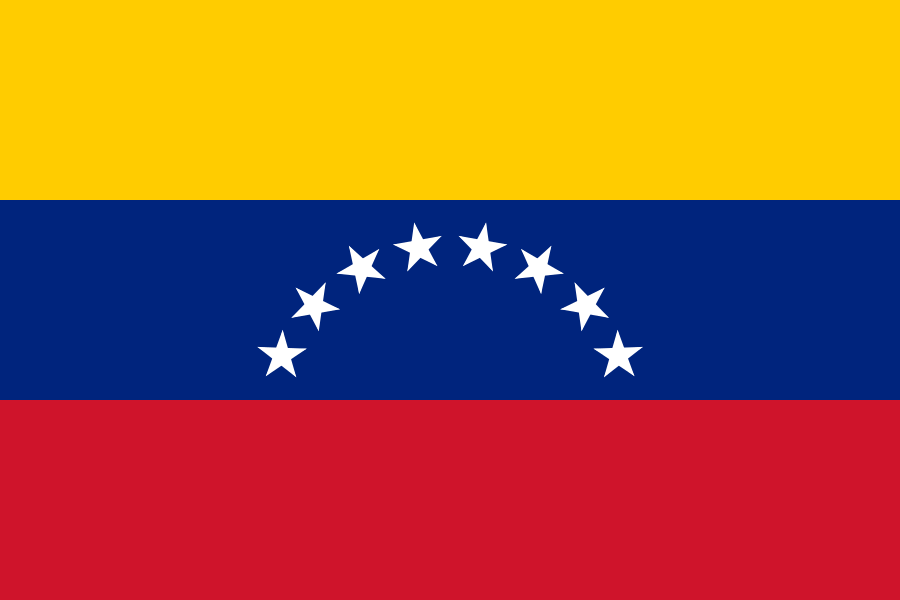
Caracas appears in Gerard Adriaan Heineken's export journal in 1884 — no quantity given, just the city, just the year. Venezuela at the time was a republic barely sixty years old, still shaped by Spanish colonial architecture and the tobacco and cacao trade that had made the country's coastal cities wealthy. Dutch ships had been moving between Venezuela and the Netherlands since the 17th century, when Curaçao became a trading hub for the region. A case or two of Heineken arriving in Caracas in 1884 was unremarkable — one European luxury among many moving through a port city connected to Amsterdam by a long history of maritime commerce.
The modern Venezuelan beer story belongs entirely to Empresas Polar. Founded in 1941 in the Antimano suburb of Caracas, Polar grew into the largest private company in Venezuela, capturing 75% of the beer market and becoming as synonymous with Venezuelan identity as Polar itself. Heineken — as a Dutch import, arriving by container — occupies the premium shelf in a market where Polar dominates everything below it. The economic crisis that engulfed Venezuela from 2015 onward made imported goods scarce, expensive, and logistically complicated. Heineken's availability has fluctuated accordingly.
No brewery. No stake in Polar. Just the green bottle, imported when conditions allow, in a market that has always had its own answer to the question of what beer should taste like.