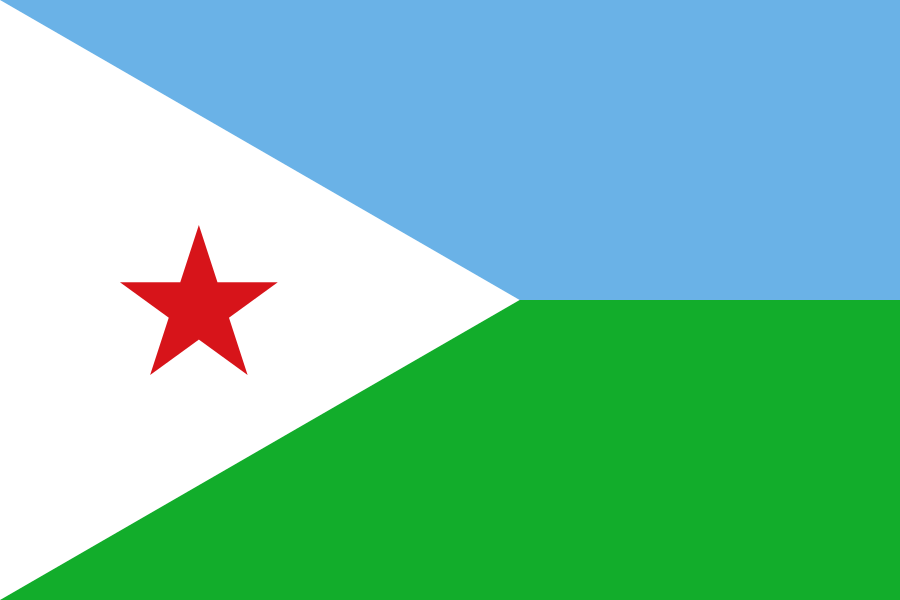
Djibouti has never brewed a single drop of beer. Sitting at the mouth of the Red Sea, where the Gulf of Aden meets one of the busiest shipping lanes on earth, it has always been a place where things pass through — cargo, soldiers, diplomats, and yes, cold beer arriving by container rather than copper kettle.
The French were here first, and they brought their drinking habits with them. When Anciens Établissements Fratacci B.B. Modi opened their doors in 1976 — one year before Djiboutian independence — they were already stocking the bars and mess halls of French Foreign Legion soldiers with everything Europe's breweries could offer. Dutch beer was part of that picture. It still is. The Netherlands remains the second largest source of beer imports into Djibouti today, and there is only one Dutch beer that moves in those kinds of numbers.
Five hundred and thirty kilometres to the west, in the ancient walled city of Harar, sits the closest Heineken brewery to Djibouti's port. When Heineken acquired Harar Brewery in 2011, the Africa Report noted it directly: Harar is the only brewery in eastern Ethiopia, and its position makes Djibouti a natural export destination. The road between them is one of the most travelled trade corridors in the Horn of Africa — Ethiopian goods flow east to the sea, and imports flow west into a landlocked neighbour that depends entirely on Djibouti's port to breathe.
Heineken Lager arrives here not with fanfare but with quiet consistency. In a country that is 94% Muslim, alcohol is legal but discreet — available in hotels, select restaurants, and licensed supermarkets in Djibouti City, mostly for the steady flow of foreign military personnel, expats, and travellers that have always defined this small, strategic republic. You will not find it on every street corner. But order a beer at the right hotel bar in Djibouti City, and a green bottle with a red star is a very likely outcome.
No brewery. No joint venture. No local brand. Just Heineken, doing what it has done in port cities since Gerard Adriaan first started loading crates onto ships in Amsterdam — showing up where the world comes to trade.